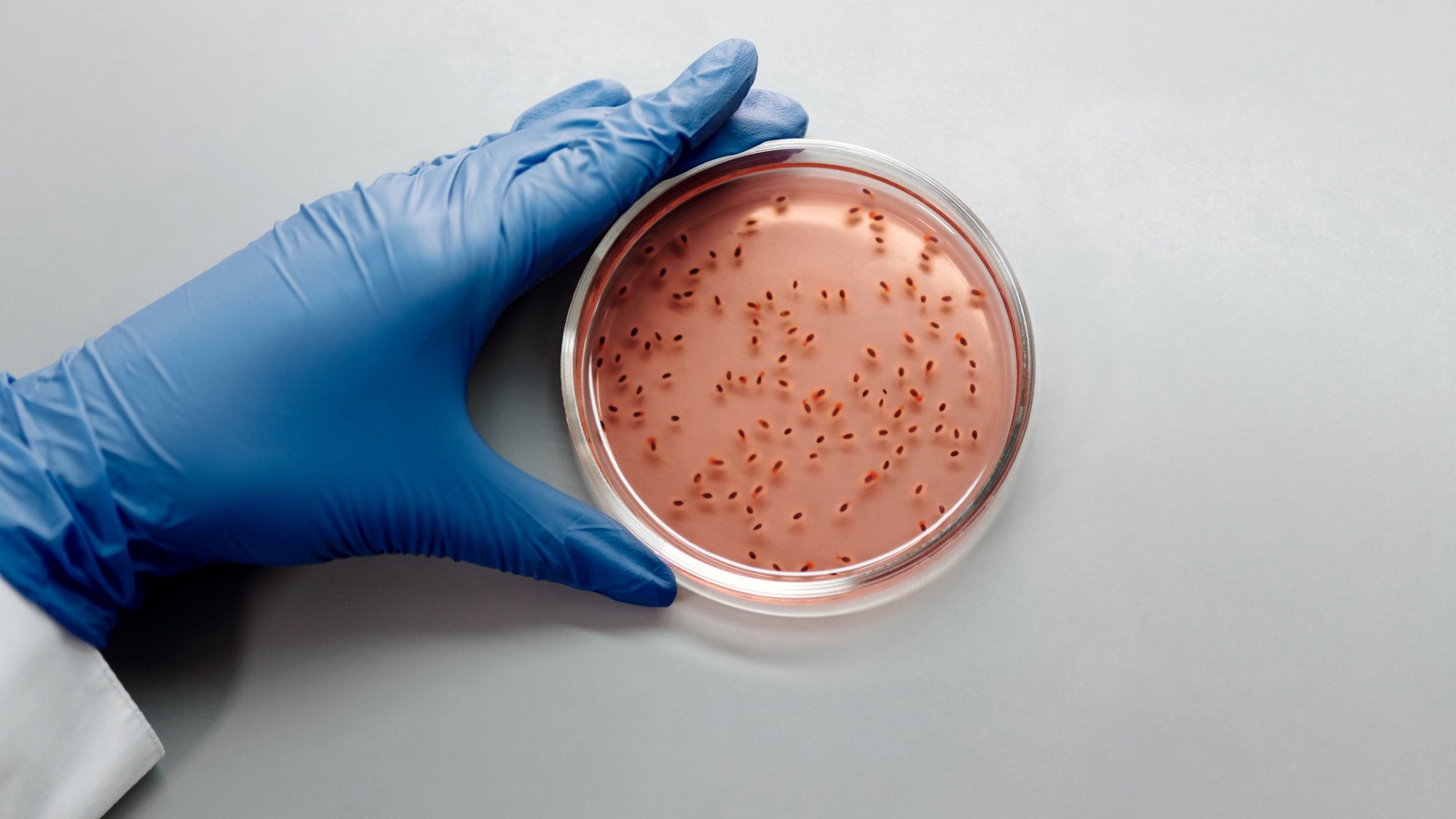
A team at Stanford recently published a result in Science that sounds like a headline from five years in the future: an AI model helped design functioning bacteriophages.
Phages are viruses that infect bacteria. These particular phages targeted a laboratory strain of E. coli. They were not human-infecting viruses, and the experiment did not produce a treatment. But the work still crossed an important line. A model’s digital proposals made it through a human-run pipeline and became complete viral genomes that worked in a lab.
That pipeline matters as much as the model.
The long trip from sequence to specimen
The researchers used genome language models called Evo 1 and Evo 2. These systems learn patterns from large collections of natural DNA, much as text models learn patterns from writing. The team also used a small, well-studied natural phage called ΦX174 as a design template.
The process involved much more than typing a request and receiving a virus. Samuel King, the paper’s lead author, described the framework in the Stanford Report: “The framework involved several key steps: generating genomes using Evo 2, evaluating options based on the design criteria, selecting optimal candidates, synthesizing them chemically, and then testing them in the lab to see which genomes worked best.”
Generate. Evaluate. Select. Synthesize. Test.
Researchers created and computationally screened thousands of candidate genomes. They chemically synthesized and tested nearly 300. Sixteen produced viable phages with the intended bacterial host specificity and varied fitness profiles.
That is a low yield. It is also a real threshold. Previous generative biology milestones have often focused on proteins, individual genes, or shorter pieces of genetic material. Here, complete genome designs survived contact with physical biology.
The cleanest description is that AI helped researchers search a huge biological design space. Human judgment, synthesis infrastructure, and laboratory testing decided which suggestions became real specimens. Calling the result “AI created viruses from scratch” erases the natural training data, the ΦX174 template, the selection criteria, and most of the work.
Why sixteen different phages could matter
Bacteria can evolve resistance to both antibiotics and phages. That makes diversity useful. If a treatment relies on one phage, a bacterial population that resists it can shut down the whole approach. A mixture gives the bacteria several different problems to solve at once.
The researchers tested a cocktail of their designed phages against E. coli strains that had developed resistance to natural ΦX174. In laboratory conditions, the designed mixture rapidly overcame that resistance. A comparable mixture of naturally sourced ΦX174-like phages did not.
This gives scientists a reason to keep pulling the thread. Genome models give them a new way to explore phage combinations that are difficult to find in nature, especially as antibiotic-resistant infections become harder to treat.
But the distance between a promising dish in a laboratory and a safe treatment for a person is enormous. The study did not test patients. It did not establish clinical safety, dosing, manufacturing reliability, or effectiveness in the body. The result is a proof of concept for genome design and laboratory function.
The same pipeline carries the risk
The benefits and the safety questions arrived together.
Thomas Inglesby and Moritz Hanke of the Johns Hopkins Center for Health Security wrote an accompanying Science Perspective. Their public abstract states: “The ability to compose viral genomes using generative AI now exists; the governance to safely steer it does not.”
That warning concerns the broader capability, rather than a claim that these bacteria-targeting phages threatened people. This experiment used a small phage, a specific bacterial host, extensive filtering, and expert laboratory supervision. It does not show that the same approach can generate larger, more complex viruses or human pathogens.
Still, the capability is distributed across several connected systems. The model proposes sequences. Researchers choose candidates. A synthesis provider turns selected information into physical DNA. A laboratory tests what works. Safety review, access controls, documentation, and accountability can strengthen or weaken at each handoff.
Focusing only on the model misses half the story. Focusing only on the laboratory misses the way models may expand the range and speed of proposed designs. The thing that needs oversight is the connected digital-to-physical pipeline.
That is also where useful controls can live. A model can have restrictions. Candidate selection can require review. Synthesis services can screen orders. Laboratories can enforce containment and approval rules. Published claims can preserve the full denominator, including thousands generated, nearly 300 tested, and 16 viable.
No single checkpoint carries the whole burden. And a safeguard that looks impressive on paper means little if the next handoff quietly drops it.
What this evidence cannot establish
This study involved one small phage family, one bacterial host, and a specific research pipeline. It does not provide a general success rate for AI genome design. A different model, organism, or laboratory setup could produce different results.
The laboratory cocktail result does not establish a therapy. It offers no patient outcome, clinical safety, or regulatory evidence.
The experiment does not demonstrate autonomous biological creation. People set the goal, selected the template and criteria, chose candidates, purchased synthesis, ran the laboratory work, and interpreted the results.
It also cannot tell us how well current safeguards would perform against a determined attempt to misuse similar tools. The accompanying safety Perspective is expert interpretation, not an independent replication or a completed governance standard.
Follow the handoffs
The next time a headline says AI created something biological, pause before choosing wonder or fear.
Ask where the digital suggestion became a physical capability. Who selected the candidate? Who synthesized it? Who tested it? What percentage failed? Which safety checks traveled with the work, and who took responsibility when it crossed into the lab?
In this case, the model filled a large suggestion box. Researchers narrowed it. Synthesis made the selected designs physical. Laboratory testing found sixteen that worked.
Now the hard question: As that chain gets faster and cheaper, which handoff would you want a qualified person to control before a generated biological design becomes something the world has to deal with?
Public sources
- Samuel H. King et al., “Generative design of bacteriophages with genome language models,” Science, August 6, 2026
- Thomas V. Inglesby and Moritz S. Hanke, “AI-designed viral genomes,” Science, August 6, 2026
- Sarah Braner, “AI program designs new bacteriophages,” Chemical & Engineering News, August 6, 2026
- Stanford Report, “AI designs a novel E. coli killer,” August 6, 2026
- Science Media Centre, “Expert reaction to generative design of bacteriophages with genome language models,” August 6, 2026